“The only Hebrew version of the perennially popular Arthurian legends was written in northern Italy in 1279. […] The 13th-century Italian Jewish translator’s literary methods are as fascinating as are the Arthurian stories in Hebrew dress. The scribe not only translates from Italian, [..] he also changed and Judaized the story. The scribe’s manner of Judaization is evident at the outset of the romance; the apology itself is filled with terms from a familiar Jewish world. Instrumental to the Judaization of the Arthurian romance are the scribe’s choice of plot (the seduction of Igerne by the king, with its parallels to the David-Bath-Sheba story), additions and omissions, use of language, and treatment of certain passages to stress Jewish ideas. For instance, the feast at which Uther meets Igerne is described in the Old French sources as a Christmas feast. In the Hebrew version, the statement “Then the king made a great feast for all the people and all the princes” (based on Esth. 2:18) conveys the aura of a Purim feast. Another example of such transference of concepts occurs when the translator takes the talmudic word tamḥui (“a charity bowl from which food was distributed to the needy”), with its uniquely Jewish associations, to describe the grail, an overtly Christian symbol. The constant use of well-known biblical phrases reminds the reader of religious literature and produces the effect of biblical scenes in the midst of the Arthurian narrative. In this fashion, then, the text and the language interact in polyphonic fashion.”
Holy heck, I considered myself something of a King Arthur buff and I had no idea about this! Does this mean after all this time I can imagine a Jewish round table?
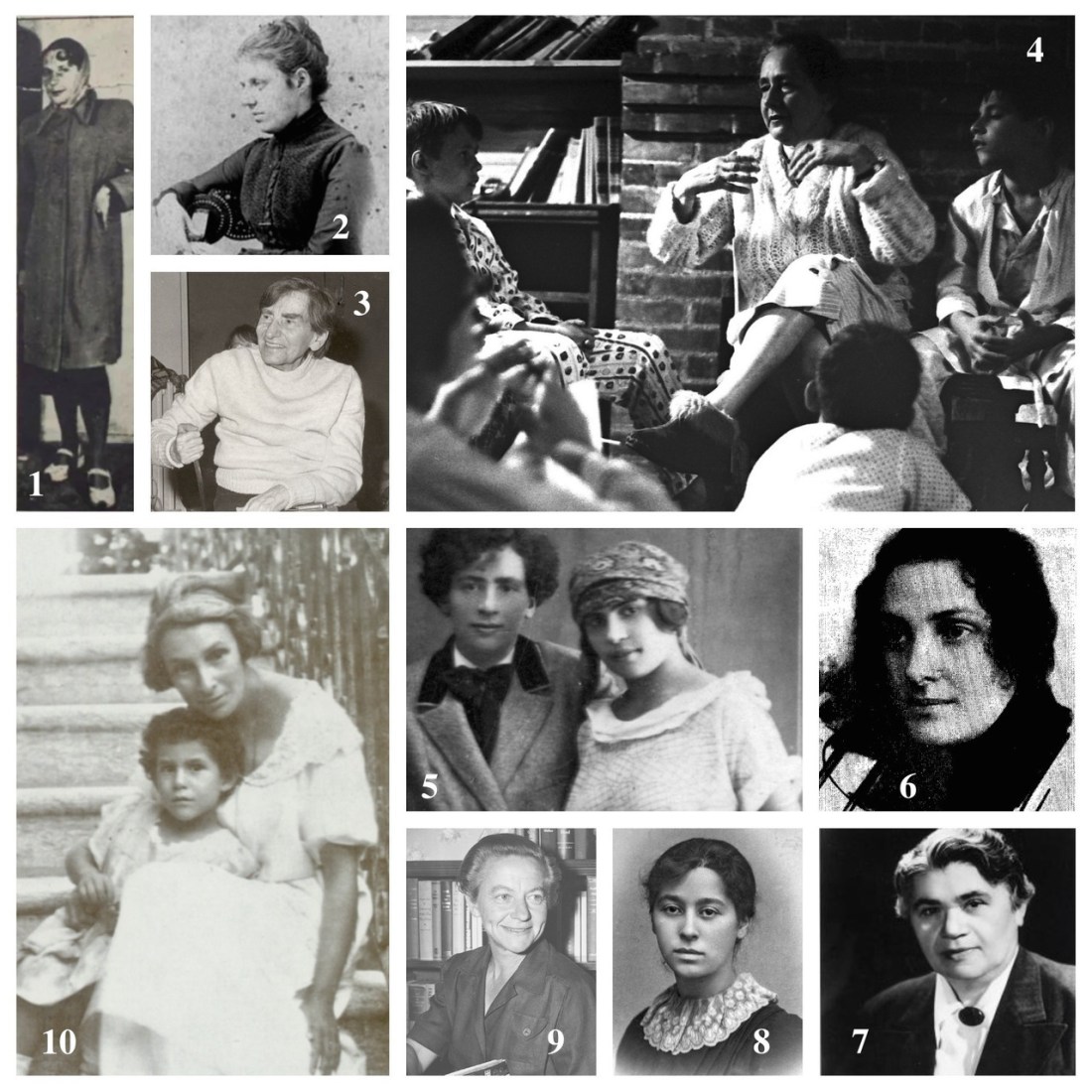
10 LGBTQ Jewish Women from History You Should Know
Another sneak preview from my anthology, in honour of International Women’s Day! Preorders will be coming soon: to sign up, go to the Print-O-Craft website! And of course this isn’t a comprehensive list… These are just entries for which I happen to have photographs (and so it’s very 20th-century heavy, and Ashkenazi-heavy — but trust me, there’s more in the book!).
Clockwise, from top left:
1. Rina Natan (b. 1923). The first trans woman known to have transitioned in Israel. Born in Germany, she made aliya in 1946, and began advocating for her case for transition in 1953, inspired by Christine Jorgensen. She finally underwent sex affirmation surgery at Assaf Harofeh Medical Center in 1956 and received a new te’udat zehut [identity card], but continued to face discrimination and suspicion. In 1958 she left Israel for Switzerland; further details of her life are unknown.
2. Emma Lazarus (1849-1887). Born to a prominent American Portuguese-Sephardi family, Lazarus is most well known for her poem, “The New Colossus,” written in 1883 and inscribed on the base of the Statue of Liberty in 1903. In several of her other published and unpublished poems, Lazarus openly expressed a yearning desire for emotional and erotic connection with other women, but nothing is known about her own sexual or romantic life; Lazarus died of Hodgkin’s disease at the age of 38.
3. Charlotte Wolff (1897-1986). A German Jewish physician, psychologist, and sexologist. In 1933 she fled Nazi Germany to Paris, and then to London, where she lived the rest of her life (with a brief return to Germany in the late 1970s). Her first publications dealt with cheirology (the study of the hand), but in the late 60s she turned to the study of sexuality, and began a series of in-depth interviews with lesbians and bisexual women that resulted in her groundbreaking study Love Between Women (1971), followed by Bisexuality (1977).
4. Vera Lachmann (1904-1985). A renowned classicist, poet, and teacher. Born in Berlin, she graduated from the University of Berlin in 1931; in 1933, she opened a school in Berlin for Jewish children, and maintained it until the Nazis closed it in 1939. Lachmann managed to escape Germany in November 1939 to the US, and taught at Vassar, Bryn Mawr, Yale, and finally Brooklyn College, until her retirement in 1974. She also founded a boys’ educational summer camp, Camp Catawba, in the Blue Ridge Mountains of North Carolina; Lachmann directed the camp until its closing in 1970. In 1950, Lachmann met the woman who would become her lifelong partner: American composer Tui St. George Tucker (1924-2004), to whom Lachmann dedicated her 1969 book of poetry, Golden Tanzt das Licht im Glas [Golden Dances the Light in the Glass].
5. Eve Adams (1891-1943). Born Ewa Zloczewer, in Mława, Poland. Immigrating to the United States in 1912, she moved to New York and opened a tearoom in Greenwich Village, referred to as Eve’s Hangout. It was raided in 1926, and an undercover female police officer confiscated a pioneering book Adams wrote (under the name Evelyn Addams) titled Lesbian Love. For publishing an “obscene” book, and for allegedly flirting with the policewoman, Adams served a year and a half in prison; since Adams was not a US citizen, she was then deported back to Europe. She settled in Paris, where she befriended (and sold the books of) a number of local and visiting literati, including Henry Miller and Anaïs Nin. After the Nazi invasion of France, Adams fled to Nice, but was deported to Auschwitz on December 17, 1943, and murdered there.
6. Dine Libkes (b. 1900). The pen name of Dine Kipnis-Shapiro, born in the Ukrainian shtetl of Slovechno in 1900. Libkes moved to Kiev as a young woman and published a number of stories, poems, and translations there; a number of her poems were republished in Ezra Korman’s Yiddish anthology of women’s poetry, Yidishe Dikhterins Antologye (Chicago, 1928). Her poetry speaks of longings and sensual desires for other women, although without explicit eroticism. Libkes apparently survived WWII in Central Asia, and returned to Kiev after the war.
7. Pearl Hart (1890-1975). One of the leaders of Mattachine Midwest, the Chicago chapter of the national homophile activist organization. Hart was born in Michigan, and raised in Chicago; her father, a Russian-born rabbi named David Harchovsky, served a congregation on the Near West Side. One of the first female attorneys to specialize in criminal law, she was admitted to the Illinois Bar in 1914, and practiced law for 61 years, working until just weeks before her death. A founding member of the National Lawyers Guild, and the American Committee for the Protection of the Foreign Born, she devoted her life to fighting for the rights of the vulnerable and oppressed, especially women, children, immigrants, and gay men and lesbians. She herself had two long-term female partners — singer/actress Blossom Churan, and activist/writer Valorie Taylor — but Hart never publicly identified as a lesbian; she portrayed her involvement with Mattachine as that of a professional legal advisor.
8. Amy Levy (1861-1889). A pioneering novelist and poet, born in London to an acculturated, upper middle class Anglo-Sephardi family. She received an excellent education, and was the first Jewish woman to be admitted to Newnham College of Cambridge University. Her first volume of poetry, Xantippe and Other Verse, was published in 1881, and over the next decade she published two more poetry collections, three novels, and many articles. She travelled throughout Europe, and in Florence met and fell in love with Vernon Lee (Violet Paget), a British lesbian writer and essayist, to whom she dedicated several love poems. Levy struggled all her life with depression, and with alienation as a woman and a Jew; she committed suicide in 1889, just before her 28th birthday. Oscar Wilde eulogized her, saying, “to write thus at six-and-twenty is given to very few… The world must forego the full fruition of her power.”
9. Jo Sinclair (Ruth Seid, 1913-1995). Award-winning leftist American writer, born in Brooklyn to parents who had fled pogroms in Russia. Her first published novel, Wasteland (1946), is a landmark both of Jewish-American literature and LGBTQ literature. The novel focuses on Jake Braunowitz (who also goes by John Brown), an American Jew struggling with his Jewish identity, and his sister Debby, who is both a committed Jew and a lesbian, although she never uses that word for herself — the closest Debby comes to naming herself is when when she tells Jake, “the odd ones, the queer and different ones. They were people. I was people… I was them.” Jonathan Ned Katz described Debby as “probably the most complex, human, and affirmative portrait of a homosexual (male or female) to appear in American fiction” until the 1960s. Seid herself was generally quiet about her lesbian identity, although she did discuss it more freely in letters from the 80s and 90s. She published a memoir in 1993, The Seasons, and spent her last years with her partner, Joan Sofer, in Pennsylvania.
10. Jessie Sampter (1883-1938). American Zionist writer, poet, and educator. Born in New York City to an assimilated, middle-class German-Jewish family, at the age of 12 she contracted polio, and lived for the rest of her life with chronic pain, muscle weakness, and limited mobility. Drawn to Zionism, Sampter moved to Mandate Palestine in 1919, and published dozens of books, essays, and educational materials about Zionism. Soon after her arrival she met a Russian immigrant named Leah Berlin, and the two of them lived together, along with a Yemenite orphan that Sampter adopted, for almost all the remainder of her life. Her recollections connect her disability and her own erotic desires through the complexity of her embodied experience.
“In the Mishnah, Rabbi Yosi makes the radical statement: “androgynos bria bifnei atzma hu / the androgynos he is a created being of her own.” This Hebrew phrase blends male and female pronouns to poetically express the complexity of the androgynos’ identity. The term bri’a b’ifnei atzmah is a classical Jewish legal term for exceptionality. This term is an acknowledgement that not all of creation can be understood within binary categories. It recognizes the possibility that uniqueness can burst through the walls that demarcate our society. The Hebrew word bria (created being) explicitly refers to divine formation; hence this term also reminds us that all bodies are created in the image of God. People can’t always be easily defined; they can only be seen and respected, and their lives made holy. This Jewish approach allows for genders beyond male and female. It opens up space in society for every body. And it protects those who live in the places in between.”
—
Created by the Hand of Heaven: A Jewish Approach to Intersexuality
by Rabbi Elliot Rose Kukla and Reuben Zellman on Saturday April 21, 2007
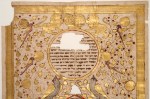
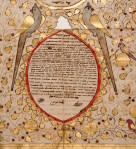
This ketubbah blends visual motifs found across the Jewish Diaspora—a crown, symbolizing the Torah, and the rampant lions of Judah—with the depiction of ten parrots, birds celebrated in southern Indian poetry and folklore.
I feel like the reason there aren’t any ‘Jewish hero fights the Fair Folk’ stories is because we’d easily get out of that situation.
Like, put Hershel of Ostropol in any situation involving the Fair Folk and bro would talk his way out.
This is why I’m not really scared of paranormal beasties. But yes, I’d enjoy reading this happen.
Names have power? Give them your secular name and not your Hebrew one.
If you eat their food you’re trapped? It’s not kosher anyways.
They speak in riddles? What, and you didn’t grow up answering a question with a question?
Confuse the Fair Folk with impossible halachic questions: if a man falls off a roof and onto a woman and as a result she becomes pregnant, is he obligated to marry her and is the child a mamzer? If meat is grown in a laboratory from a mix of various animal cells is it kosher, and is it even meat, and what bracha would you even say on it? Is a unicorn permitted to cleanse a poisoned stream on Shabbat using the innate purifying powers of its horn or does it count as work? Can it be justified as pikuach nefesh? Can necromancy be justified as pikuach nefesh, if one approaches necromancy with the understanding that it is just delayed medical assistance?
And if all else fails, you can always get out a fleischig pan, kick ass and take names, and don’t forget to say the blessing for fucking someone’s day up:
I went to do tashlich and this asshole goose swooped in and ate all the bread and looked at me with this smug-ass expression BUT the joke’s on him bc he ate all my guilt, I am Cleansed and he is a Guilt Goose
This post is for people who are Jewish, converting to Jewish, seriously interested in Jewish conversion, or are Jewish-Adjacent (part of an interfaith family, etc.). It is **not** for gentiles who wish to “deepen their connection to Jesus” or any similar reason uninvolved with genuine interest in becoming a part of the tribe or participating with loved ones, as that is a form of cultural appropriation. Thank you for your understanding. Gentiles CAN, however, reblog!
So you know how to celebrate Rosh Hashanah. You know the ten days between Rosh and Yom Kippur are still important, even if they aren’t the main holidays. And you want to do something to mark time passing. Boy, am I here for you!
Educate Yourself on what the Days of Awe Are
The Days of Awe are the Ten Days between (and including) Rosh Hashanah (ראש השנה) and Yom Kippur (יום כפור)
They are called the Yamim Noraim (ימים נוראים) in Hebrew
The days that aren’t Rosh Hashanah and Yom Kippur are sort of the “intermediate” Days of Awe
But that doesn’t mean they aren’t still important
Some include the entire month of Elul with this period in a term called the 40 Days of Repentance (but I decided to start this series after Elul, so y’all are just going to have to wait for next Elul for my Elul-specific post)
You can also call these the 10 Days of Repentance, if you choose
The Days of Awe are typically a period of enhanced teshuvah, introspection, and awareness of HaShem
They celebrate the anniversary of Creation and HaShem making decisions about how the coming year will go
The common idea is that on Rosh Hashanah, HaShem opens the book of life, where HaShem inscribes people for life, blots out the names of really bad people, and the intermediaries (ie: almost everyone) spend these ten days trying to repent, return (teshuvah) to HaShem, and do typical “crap time has passed I should be better” stuff
The Book of Life is then sealed on Yom Kippur (though, in theory, you have another chance at Sukkot, but more on that later)
So, even though Rosh Hashanah and Yom Kippur are the big days, the intermediate days are important too, because these are the days of high-powered teshuvah
There’s also a lot of eating of food, studying of texts, davening, and counting of luck, like Rosh Hashanah, but I’m not making this post a repeat of my RH post 😛
There is a lot more to learn about this period – don’t just stop here! These are just the basics
We greet each other with “Shana Tova” meaning A Good Year (to you), but sometimes people begin to transition to “G’mar Hatima Tova” or “G’mar Tov” (May You Be Sealed in the Book of Life) as Yom Kippur nears. You can also wish people an easy fast, since Yom Kippur is the most widely-observed fast amongst Jewish people
On days that aren’t Shabbat, Rosh Hashanah, or Yom Kippur, you can work. Don’t jeopardize your livelihood for teshuvah, please. If you get those days off regardless, though, more power to you.
Try to take some time to Daven
There are three acts to attempt to sway HaShem’s decree on Rosh Hashanah: Teshuvah, Tefillah, and Tzedakah (Returning/Repentance, Davening/Prayer, and Charity/The Necessity of Helping Others)
So let’s talk about the middle one first because why not
Davening, or the rough equivalent of prayer in Judaism, is vital to the Yamim Noraim
There are special portions inserted into the regular service – including the Amidah. Follow your siddur (prayerbook)’s directions, if you need to
Sacharit is the morning prayer service (including many blessings for waking up and existing, and praise for HaShem); Mincha is the afternoon prayer service (the shortest one, it doesn’t have the Sh’ma); Maariv is the evening prayer service (in the middle, it doesn’t have as many words of praise, but does include the Sh’ma)
You can also try and include more blessings than you usually do in your day, including blessings after meals (benching) and blessings for varying types of foods you eat (which are said beforehand)
The point of all of this is to try and be mindful, to have your mind open to HaShem. So if you don’t want to follow a traditional davening order, you can also meditate, go outside, spend time amongst nature and with your thoughts
Introspection is important for this time period. Though a lot of that will be Teshuvah (see below), there’s also just general looking at yourself, your past year, and how you want the new year to be.
What would you like to accomplish?
What would you like to let go of?
What are things in yourself you’d like to change?
What are things you’d like to stay the same?
Who have you lost contact with, and you’d like to get in touch with again?
Who do you need to remove from your life, for it to be healthier?
How do you want to deepen your connection to Judaism and/or HaShem?
Try to keep HaShem, teshuvah, and the spirit of the time in your thoughts throughout the day – and a good way is davening
You can daven without a minyan (group of 10+ Jewish adults (sometimes only men count), but in some traditions you can’t say certain prayers (such as the baruch’u) – look into local synagogues and see if they offer minyan services
Mark Shabbat Shuvah
The Shabbat between Rosh Hashanah and Yom Kippur is a very special shabbat, given its own name – Shabbat Shuvah
This literally means the Sabbath of Return
You can also call it Shabbat T’Shuvah (Sabbath of…. Return/Repentance)
This is a Shabbat marked by increased solemnity, thinking about teshuvah, and considering the coming year
The themes are the same as all the Yamim Noraim, but it’s a good day to pay special attention – if you work on teshuvah, tefillah, & tzedakah only one intermediate day, this is the day to do it
Read and study traditional texts!
The Torah reading kind of depends on how the year is structured in general, it isn’t always one thing or another. Use the internet to find out what the parsha is in a particular year – this year (5779) it’s Vayeilech (Deut. 31:1 – 31:30), last year (5778) it was Ha’Azinu (Deut. 32:1 – 32:52). It just depends.
The Haftarah (Prophets/Nevi’im) reading, however, stays constant
Ashkenazi tradition reads Hosea 14:2 – 10, and Joel 2:15 – 27
You also can study the Haftarah that goes with the Parsha in question if it’s not on Shabbat Shuva
This is moderately unorthodox, and if you have limited time focus instead on the traditional Shabbat Shuva Haftarot
For Vayeilech, the Haftarah is Isaiah 55:6 – 56:8
For Ha’Azinu, the Haftarah is II Samuel 22:1 – 22:51
It’s really up to you, but traditional texts are studied for a reason – try to contemplate what they’re saying about the season of return
Try to go to Shabbat services – almost all synagogues will have them Friday night & Saturday morning, and unlike High Holy Day services, you don’t need a ticket (usually)
This is a solemn Shabbat. Make it solemn for you.
This isn’t my Shabbat post, so I’m not going to talk about how to observe Shabbat (or different ways to do so)
Just try to spend the day thinking about the previous chag (Rosh Hashanah), and the upcoming one (Yom Kippur), and the themes of the ten days in general
Have I Talked About Teshuvah Yet
Teshuvah is the theme of the season, and every day of the Yamim Noraim are days to practice it
The steps of Teshuvah are as follows:
1. Regret what you have done
2. Abandon these practices (if you haven’t already)
3. Confess and apologise for what you have done to the appropriate parties (a person, if you have wronged them; HaShem, if you have wronged HaShem, or you know, both – but don’t skip apologising to a person)
4. Resolve & Commit to acting better
Sometimes, you can’t get forgiveness. And that’s okay. You have done everything you can – as long as you commit to returning to the right path of behavior, and attempt to rectify what you’ve done
Sometimes, you can’t even ask for forgiveness, depending on the circumstance. Be sure to think about what that means for you – how that impacts your teshuvah. What can you do to make up for it? How can you rectify your behavior?
It’s not enough to just apologize. You have to try and make it right. You have to try and repair the world (tikkun olam)
Teshuvah is an extraordinarily personal process. I can’t make too many sweeping declarations.
If you have mental or physical illness, or a rough year in general, or anything else that seriously impairs your ability to do teshuvah, do teshuvah to yourself
Self-care is a valid method of returning, imo. You can think differently, but it’s too easy to be too hard on yourself – especially for people with mental illness – this season.
There is no intermediary in Judaism. A rabbi can not ask HaShem for forgiveness for your sins against HaShem; HaShem cannot forgive you for sins against a person. You have to go directly to whom you have harmed (including, in many cases, yourself), try to rectify it, and ask for forgiveness. And you are not owed that forgiveness either.
If someone asks you for forgiveness, consider your own teshuvah
Will forgiving someone who has wronged you help you to take care of yourself? Be a better person? Help you to move on?
Or will it reopen a wound, and hurt you even further?
I can’t tell you the answer to this question. Only you can.
It’s a mitzvah to forgive someone, but it’s not a mitzvah to hurt yourself. Find a balance.
Give Tzedakah
Apart from Rosh Hashanah, Shabbat, and Yom Kippur, you can give tzedakah freely on the Yamim Noraim – and you should!
Tzedakah is often translated as “charity”, but it doesn’t really line up with that
Charity, in Xtianity, is seen as optional – that you’re doing a nice, good thing, but voluntarily
Tzedakah, however, is mandatory
There are hierarchies of tzedakah, but this isn’t my tzedakah post, so I’m not going to go too into them – just know that even giving begrudgingly and as little as you can is fulfillment of the mitzvah
However, the mitzvah is heightened the more you commit to it. The highest step of the scale is giving an individual the ability to take care of themself, and to not rely on tzedakah any longer
Many communities and synagogues take up collections – both of money and of food – during the Yamim Noraim. Look into those as ways to fulfill this mitzvah
You can also donate money to causes and groups you care about
Consider ones that aid particularly “hot button” issues (such as the separation of immigrant families, or the prison strike)
Groups that aid the Jewish people are also particularly poignant this time of year
I can’t dictate to you how to fulfill this mitzvah; you alone know what you care about enough to give money to
Even the poorest should give tzedakah
If someone receives tzedakah, they must give some of that as tzedakah in turn
Even if you are the worst off person in the world (which, doubt), you can always help others
HaShem is understanding, of course, but this is a season of returning. Do what you can.
It is not a mitzvah to render yourself destitute
You should give tzedakah, but only according to your means
Giving so much tzedakah that you require tzedakah yourself as a result is literally the opposite of a mitzvah
Give, but only give what you can
You can (and should!) also do other acts of tikkun olam, such as volunteering, but nothing really takes the place of giving money or material goods to people who desperately need them
Don’t Act Like On Normal Days
These are important, highly spiritually charged days. Don’t treat them just like any other.
Besides Teshuvah, Tefillah, and Tzedakah, consider marking the days in other ways
Study religious texts
The stories of Genesis are particularly poignant, given that Rosh Hashanah marks the universe’s “birthday”
Reading the writings of the prophets, which describe tikkun olam extensively
Study the texts in Numbers that describe this time of year
There are also psalms that discuss teshuvah, and other writings. Sefaria is a great online resource with free access to these texts.
Eating sweet foods is always a great thing to do this time of year – you still want it to be a sweet year, right? That hasn’t changed since Rosh Hashanah
In fact, it’s traditional in some communities to dip challah in honey throughout the month of Tishrei (which the Yamim Noraim are a good chunk of)
Honey, apples, new fruit – mark the time with sweetness
Plus, you know, a certain fast is coming up. Enjoy food.
Many people only eat food prepared by other Jews – either year round, or especially during this time period. This custom is called Pat Yisrael. Sometimes this is not possible, though, so don’t starve yourself. Follow the minhag (custom) of a group you consider yourself a part of, if you have one
Kapparot is a thing
During the week, some Orthodox communities still follow this practice (it was much more of a thing in the past)
The idea is purchasing a live Galliform (like a chicken) during the week; and then, on the morning before Yom Kippur, you wave it over your head, praying that the bird is atonement for your sins. Then you kill the bird and give the food (or money equal to the food) to the poor.
Some Jewish people today use money instead of a living animal
This practice has fallen heavily out of favor (to the point of many liberal-movement Jews not even having hurt of it) because it seems… superstitious, to say the least
But, if it’s the minahg of the community you’re a part of, knock yourself out, I guess
Rituals are ways for our monkey brains to feel like we’re providing order to the chaos of the universe; to feel like we’re a part of its continuation and fate; and, for Jews, to feel like we’re living Jewishly. If you want to fashion your own ritual (please… for me… don’t kill anything…) in the style of Kapparot, to give your monkey brain a more physical method of atonement, go ahead.
This is not a replacement for teshuvah
Please do teshuvah
And look, I’m a vegetarian, I’m not really about encouraging the killing of animals (especially birds! why would you hurt the dinosaur???????) but I would never disrespect a community’s minhag, so if this is your custom, seriously, more power to you
Considering Observing Tzom Gedalia
I’m going to do a bigger post on how to fast soon, but here’s a little bit about a random minor fast that occurs during the Yamim Noraim
I say random because it actually has like, nothing to do with the Days of Awe
Tzom Gedalia, or the Fast of Gedalia, is a minor fast – meaning one fasts only from dawn of the day until dusk, rather than the full 24/25 hours
It marks the assassination of Gedaliah, the governor of Judah during the occupation of the country by Babylon
Jews who had fled returned under his governorship, and it seemed like the worst was over
A descendant of the royal family was sent by the king of Ammon to murder Gedaliah
This descendant killed Gedaliah, along with other Jewish people; the Babylonian King was furious, and so many of the remaining Jews in the region fled to Egypt
The text of the Tanach indicates this actually happened around Rosh Hashanah
So, to mark this tragedy – and the destruction of the First Temple/Babylonian Exile in general – a fast is held right after Rosh Hashanah (so the joy of the new year is not marred with a fast)
Special prayers are said, as with all minor fasts, and special Torah passages are read as well
If you fast, you refrain from eating food or drinking water, from sunup to sundown. Again, I’ll go through more on how to fast later, but that’s the bare bones of it
It is a solemn reminder of the tragedies of the Jewish people in the midst of the season of repentance
Take it as a day to think about Jewish history (especially in combination with Rosh Hashanah)
If fasting would render you unsafe (such as triggering an eating disorder, making you not take your meds, causing other health complications, etc.), don’t do it. It’s not a mitzvah to fast if it will hurt you.
If you don’t fast, consider refraining from other joyous activities
Focus on your spiritual needs, not material ones. That’s what fasting is about. And in this case, focus on the spiritual needs of mourning the tragedies of Jewish history, even if a little
Prepare for Yom Kippur
The Biggest Day of the Jewish Year* is a-comin’ and you should probably get ready
This is an ongoing debate that you really don’t want to get into
It’s definitely one of the biggest Single Days Per Year
Because Yom Kippur is a fast day, a major part of preparation is eating and drinking the day before
Make sure to eat up! Get those carbs and proteins
Don’t eat one big meal before the fast – instead, eat multiple meals throughout the day
Drink plenty of water. So much water. HYDRATE. I’m serious.
Consider… easing… your caffeine addiction
Drink less and less coffee every day leading up to Yom Kippur
Drink decaf, if you can bear it, the closer you get
Make it so that you won’t be dying of a caffeine withdrawal headache during all the davening
Make preparations for taking the day off
Yom Kippur is filled with more davening than Rosh Hashanah
It’s literally the entire day, with a break for sleep in the middle
(for what it’s worth, this makes fasting easier)
You will not have any free time, if you plan on going to services. You will be davening for most of a 25 hour period. It’s worth it! I love Yom Kippur, like, sincerely. But you have to be ready, with all the varying things you do day-to-day taken care of
You are Not Alone!!!!
Everyone during this time is kind of rushing around, freaking out because it’s the Days of Awe, but that just means you have people to rush and freak out with!
You can do volunteer work, give tzedakah, and daven with friends, and discuss the Yamim Noraim mood
Don’t be afraid to reach out to a community, if you want to, so that you can mark the days with others. Just explain you’re new and nervous, and people will be happy to help you!
You can’t spend every day in Jewish Community, but try to at least take some of your time to spend with others, to mark the holy time, and to connect with HaShem.
Don’t Just Listen To Me
You Know Nothing, Tziporrah… Snow
You know what isn’t universal? My perspective. Talk to other people!!! Get their perspective!!!! Especially the Kapparot thing I did not handle that topic well I apologize
Learn from all movements, cultures, and customs of Judaism. They all have something to say, something to inform about this time of year.
Read, engage, and don’t be afraid to ask questions!
Now that I have finished the process, I’m writing up a post which goes over the ins and outs of converting. It will be honest, it will be blunt, and it will be as concise as I can make it.
Study. A lot. Before you even contact a rabbi.
Judaism is a deep, rich tradition that covers every aspect of the human condition, and is more than a belief system (and, in fact, belief is a very minor part of the conversion process). It is a system of culture, ritual, and community.
The process of converting to Judaism is roughly analogous to the process of becoming a citizen of a country. You’re joining a family.
So, no, you can’t just say you believe in One God and be done with it. You have to naturalize yourself.
Ask yourself: Why do you want to be a Jew? What are you hoping Judaism will give you? What are you looking for from a religious system, and why do you think Judaism will give you what you seek?
It makes it so much easier if you do a lot of research before hand. Read books. Many many books. And websites. I can recommend things but making a full list is going to clog up this post so just message me.
We are the people of the Book. There are a lot of books. Dive in.
That said, don’t read the Torah/Tanach without help though. They are extremely complicated texts and you need a Rabbi’s guidance or at the very least ample commentary to understand them.
Investigate all forms of Judaism and attend Shabbat service at a variety of synagogues prior to contacting a rabbi. Be sure to contact a synagogue’s staff to let them know you’re visiting for security reasons, and investigate how the different communities feel to you.
Be prepared to spend money – on books, on ritual objects, on classes, on the mikvah. If you are broke, which I am so I feel you, you might be able to get a lot of these fees waved – and there are plenty of free resources out there, too. Talk to your Rabbi, when you’ve made a connection with one, about what you can afford and what limitations you face. You don’t need to pay money to go to Shabbat service.
Contact a Rabbi when you feel you are ready!
At this point in the process, you should have a lot of questions – both about what things mean, what you need to do, what the community you are joining expects of you as a convert, and how to adopt Jewish practice into your life. As such, write them all down.
It doesn’t hurt to research the rabbis or, if you meet them at service during the above step, talk to them casually to see if you have a rapport. It’s important to get along well with your rabbi and to have an understanding between you. Your rabbi is your guide as you go through the process, and you need to be able to have a good relationship with them.
Email your rabbi when you feel you are ready and have found someone you mesh well with. Be honest and forthcoming in your email – say something along the lines of “I’m looking to convert to Judaism and am interested in working with you to do so,” etc.
Every conversion is unique, but be sure to bring up any potential problems early on. If you’re trans/nonbinary, in a relationship with someone who doesn’t wish to convert, or have disabilities, it’s important to bring them up so you can work with your rabbi on how this will affect your ability to convert through that movement and what your community will expect of you.
If you do not have a community near you of the sort of Judaism you wish to convert through, it does not hurt to contact a rabbi from a nearby community outside of traveling distance. Many rabbis are willing to use modern technology to aid in your conversion. That being said, Judaism is about joining a community, so if you have to wait until you actually live near a community you want to join, that’s okay – this is a marathon, not a sprint. Take the time to study further.
Some Rabbis will deny you three times before taking you as a student. Be prepared for that, and keep coming back, if this is what you really want.
Reform Judaism is not “Conversion Light” and Orthodox Judaism is not “Conversion Hard-Mode.”
A conversion through any movement of Judaism is informed by that movement’s philosophy towards Judaism.
Reform conversion is informed by the movement’s philosophy, which is that the adoption of Jewish practice is a choice, one that has to be done through informed knowledge of each act. As such, you have to adopt each ritual with careful thought and self-analysis.
Orthodox Judaism is informed by the movement’s philosophy, which is that HaShem dictated each Jewish Practice and as such you do not have a choice, if you are Jewish you must do each mitzvah. As such, you have to adopt each ritual gradually so you can get used to all of them. Then there are the minhag to think about as well.
Both present their own challenges and simplicities. Both are difficult to do and take multiple years. This goes for Conservative, Reconstructionist, Renewal, etc. as well.
As such, you should not pick a movement for a superficial reason such as “it’s easier”, because none of them are actually easier than any other. You should choose a movement to convert through based on how it speaks to you as a person, how its philosophy lines up with your own, how the community makes you feel, and what you really are looking for in Judaism.
This is why it’s important to do a lot of introspection prior to even contacting a rabbi.
Unfortunately, other cultural forms of Judaism (ie, Sephardic) don’t usually offer conversions, but if that speaks to you, it doesn’t hurt to look into it.
Know that, depending on the movement you convert through, some Jewish people won’t consider your conversion valid. Don’t let that stop you from picking the community that feels like home. This is about you and what you want – other people really don’t matter.
Cut Any And All Ties To Any Former Religions.
When in doubt, Judaism is not compatible with another religious system. There are exceptions to this (my Rabbi loves to talk about “Jew-Boos,” i.e. Jewish Buddhists) but by and large assume you can’t remain in your former religion.
You cannot believe in Jesus as the Messiah and be Jewish. You can’t. They don’t work together. Judaism as it is today was in a large part defined in opposition to Christianity and as such they are incompatible. Messianic “Judaism” isn’t Jewish, it’s Christian.
Judaism isn’t just “Christianity without Jesus” and by this point in the process you really should know that because you in theory have read enough to know this
Be sure to preserve shalom bayit – ie peace in the home – as much as you can, but try to avoid going to other kinds of religious services, partaking in other religious rituals, and celebrating other religious holidays.
If you can’t avoid something, such as celebrating Christmas, be sure to distance yourself from the practice and remind yourself you’re celebrating for other people, not for yourself.
Because Judaism is a religion of orthopraxy (it’s about what rituals you do) rather than orthodoxy (what you believe), many non-inherently Jewish personal philosophies can be concurrent with Judaism. There are only a few important exceptions.
Yes, you can be a Scientist and Jewish. You have to cut ties with other religions, not things like science. Plus science isn’t a belief, it just… is what it is.
Adopt the Mitzvot (Jewish Practice) with the help of your Rabbi.
That’s literally why you have a Rabbi – to guide your journey
When you adopt what and how you adopt what depends on what your Rabbi recommends as well as what your community/movement expects of you
Also adopt minhag (custom that isn’t “law” per-say) slowly and steadily and with the help of your Rabbi
Study each mitzvah prior to adopting it and learn it deeply so you understand it as much as you can
Some mitzvot you can’t do till your done (such as hanging the mezuzah or wearing a tallit), or at least, you usually can’t. Talk to your Rabbi before adopting any mitzvah into your life.
Know your boundaries and your needs, and stay in your lane. Your Rabbi is your guide. Trust them, and don’t get ahead of yourself.
You have to work to unlearn antisemitism.
We live in an inherently antisemitic society. As such, we all have antisemitic beliefs – whether internalized, unconscious, or very much so conscious ones. You might think you’re not antisemitic, but the problem is – you still probably have unconscious antisemitic opinions. You have to work on them.
Read things written by Jewish people about Antisemitism and learn from them. Study antisemitic events in history and today. Remind yourself that antisemitism never actually went away after the Holocaust.
You do not know more than someone who is already Jewish about antisemitism. Do not talk over jewish people about it, and listen to them if they call out your behavior.
You aren’t a Jew yet, honey. You don’t get a free pass.
Don’t make generalized statements about Jewish people please. Judaism is ridiculously varied and diverse and so are the people.
I will never forget the time I saw someone who wanted to convert say that Jewish people “hated poor people.” Seriously. Just because you want to convert doesn’t mean you can’t be antisemitic.
Because Judaism is a different culture than western culture, remind yourself
A) it’s not like Xtianity, like, at all
B) the standards for certain things might be different
C) you have to look at the differences in culture through a Jewish lense, not a goyische one
Goy isn’t a slur. It literally just means “non-Jew”.
Fight against antisemitism where you see it and place the emotional burden on yourself to work against it because antisemitism is Nasty and you shouldn’t want it to happen
That said, be sure to practice self care
I Shouldn’t Have To Tell You Not To Hate The People You Want To Join
Immerse yourself in Jewish Culture
Listen to Jewish music!!! Maybe not all the time but often. There are lots of options and lots of different kinds and there’s such a plethora!!!!
Eat Jewish food (within dietary reason – allergies exist, I’m aware)! Go to events held by your synagogue or eat at kosher restaurants. Also, try to go kosher, especially if your Rabbi/community/movement requires it
Try to learn the aleph-bet & how to read Hebrew. If your Rabbi/community/movement requires it, definitely learn how to read Hebrew.
Learning how to communicate in Hebrew might be required of you, too, and regardless its worth looking into.
There’s a difference between Biblical Hebrew, Liturgical Hebrew, & Modern Hebrew. Know what kind you’re getting if you take a class/read a book/download the Duolingo App, etc.
Ask your rabbi for help!!!! ESPECIALLY if they require it for conversion!!!!
Hebrew is hard. Get started as soon as you can.
Consider learning Yiddish and/or Ladino too, if you want!
Jewish movies and television exist beyond Fiddler on the Roof and Prince of Egypt. Look into them and ask people for recommendations!
Jewish memes exist. Enjoy them.
Don’t just read informational books – read stories and myths too! Books by Jewish people and books featuring Jewish characters and stories!! IMMERSE YOURSELF
You’re naturalizing yourself. That means you have to go into the deep end of the pool and get as much Jewish Culture as well as Jewish Religion into your life as possible.
Feel Free to make Judaism yours
When you become a citizen of a country, you don’t stop being you. So just because you’re becoming Jewish, doesn’t mean you have to stop being you, besides what is required of you to change in the conversion process
With respect and the help of your rabbi, feel free to incorporate parts of your life into Jewish practice, or to make parts of your life More Jewish
For example, I have an Italian Background. So part of my Shabbat is making some of my favorite Italian Recipes. Traditional Jewish food? Maybe not. But it does sanctify the day and make it mine.
Jewish people are all over the world and come in every size, shape, and color – and so does Jewish practice. Don’t feel afraid to take who you are and combine it with Judaism.
Make sure to know boundaries and keep respectful, but you can still be eager and enthusiastic – becoming Jewish should be a journey of joy, so be joyful!
Look man I draw dinosaurs with kippot now you can do silly things too.
You are Not Alone!!!!
Conversion is a journey you take by yourself, but it’s a journey towards joining a people. So you aren’t alone whatsoever, and you shouldn’t feel scared to reach out for help or for community!
Make friends at your synagogue!!!! It’s the community you’re joining so you should be befriending people there and immersing yourself in it.
Make friends with the Rabbis & Cantors at your synagogue!!! They’re wonderful, friendly people and you should feel comfortable with them, especially your sponsoring Rabbi.
Make friends with people in your conversion class!!! You have a lot in common because you’re going on the same journey. Some of my best friends are friends I made through class and honestly thank HaShem I had an opportunity to make friends as an adult do you realize how hard it is when you leave college
Socially anxious? No problem! Online communities exist and plenty are welcoming to conversion students or prospective converts. Just be honest about where you are in the process.
Don’t just listen to me
I am an Idiot and I have one perspective on this. Other people will have their own. Talk to other people – especially other converts – about their journey.
The Journey to Being Jewish is unique for every single individual. You don’t know what your path will be, how long it will take, or what obstacles you might face. So be sure to ask for advice from across the board.
Many people want to help you. Many people are kind. You can, and should, build a support system around yourself of people to ask advice of. Don’t just rely on one person – whether that person is me, your Rabbi, or your friend in conversion class. Let your community support you.
In the vein of that last one, feel free to add more stuff onto this.
Pictured above is one of the ravens of Masada, in Israel.
Today is Tisha B’Av, the ultimate day of mourning in the Jewish calendar. It’s a cursed day, set in the blazing maw of summer. On this day, over the millennia, the following has happened to the People of Israel:
1. The destruction of the first Temple in Jerusalem, built by King Solomon, was destroyed by Nebuchadnezzar and the Babylonians in 587 BCE. Thus began the initial exile of the Jews from their homeland.
2. The second Temple in Jerusalem, rebuilt by Nehemia and Ezra, was destroyed by the Romans in 70 CE. Jerusalem was razed, and the Jewish people were scattered, exiled once more. This was the beginning of the Diaspora.
3. The Jewish revolt of Bar Kokhbah in 132 CE against the Romans was crushed. Roman commander, Turnus Rufus, plowed the site of the destroyed second Temple and the immediate area around it.
4. The fall of the desert fortress of Masada – the last Jewish stronghold left after the Roman invasion of Israel. The Jews of Masada committed mass suicide, preferring honourable death to being captured and enslaved.
5. The first Crusade began on Tish B’Av in 1096. 10,000 Jews were killed in the first month, obliterating Jewish communities in France and the Rhineland. The total number of Jewish lives taken by the end of the first crusade was 1.2 million.
6. The Jews of England were expelled on Tish B’Av in 1290.
7. The Jews of France were expelled on Tish B’Av in 1306.
8. The Jews of Spain were expelled on Tish B’Av in 1492.
9. On Tish B’Av in 1941, SS Commander Heinrich Himmler received the formal approval from the Nazi Party to commence the ‘Final Solution’, resulting in the capture and slaughter of nearly 50% of the world’s Jews.
10. On Tish B’Av in 1942, the liquidation and deportation of Jews from the Warsaw Ghetto to Treblinka death camp took place.
I came across this article from The Forward on Tisha B’Av which gives a lot of great information. In particular I found their fasting tips to be useful. Obviously you should pick and choose and see what fits you best, and, as always, take care of your health first. Fasting is not your top priority and you should always been listening to what your body and mind needs before custom.
TIPS FOR BEFORE THE FAST
Drink plenty of water, starting 48 hours before the fast. Increase your regular fluid intake by 30%.
Wean yourself off of caffeine starting 72 hours before the fast.
Decrease foods or drinks with refined sugar a few days prior.
Eat fruit, especially hydrating fruit like melon and watermelon, which help retain liquids.
CUSTOMS FOR THE PRE-FAST MEAL
The meal is eaten while sitting on the floor or on a low stool, as if one is sitting Shiva.
Traditional pre-fast foods include boiled egg or lentils, foods associated with mourning, their round shape a symbol of the cycle of life.
It is customary to dip bread or egg into ashes.
Traditionally, fish, meat and wine are avoided, as they’re considered celebratory foods.
AFTER THE FAST
Break your fast on 4 cups of water, before eating anything.
Eat a light meal. Salad and soup, along with bread or rice, is great for this. Dessert should be fruits only.
Traditionally, meat and wine are not consumed until the following day.
After eating lightly, step away from the table and go for a short walk.
If you are really still hungry after that, have a small snack and more water.
For those that find a fast meaningful.
This year (2018) Tisha B’Av begins the evening of Saturday July 21st, and continues until the evening of Sunday July 22nd.
IMPORTANT: This year, the 9th of Av (Tisha=9) actually falls on Shabbos, but because we don’t fast on Shabbos, the fast is pushed off until Sunday. This affects what’s written above in a few ways, among them:
1. Normally Tisha B’Av is one of the most stringent fasts (along with Yom Kippur), but when it is pushed off, there is more room for leniency if you have any health concerns (I’m talking less than life threatening – someone whose life would be endangered by fasting is never obligated to do so). Consult a rabbi if you have concerns.
2. Because the time leading into the fast is Shabbos, we do not begin the full-on mourning customs during the pre-fast meal. We do not sit on the floor or eat foods associated with mourning. No dipping anything in ashes. It is fine to eat fish, meat, and wine (actually, fish is not a problem even when the date falls differently, not sure where they got that from).
3. While normally one can keep eating on Shabbos indefinitely so long as one washed for hamotzi before sunset, the pre-fast meal must be finished before sunset (while Shabbos doesn’t end til nightfall, which is a later time).
4. Because it is not possible to make havdala Saturday night (because that would involve drinking wine/grape juice, and the fast has already started), one must make a modified havdala prior to breaking the fast.
See here for an article covering this topic of Tisha B’Av falling on a Shabbos and being pushed off til Sunday.
See here for more information on Tisha B’Av as a whole.



 tora42's nonsensne