It doesn’t mean “this is ideal or healthy or even realistic”. It means “this is beautiful, this is tragic, this is grotesque, this stirs emotion”, even if it’s not, as @starryroom puts it, something you would be comfortable seeing play out in front of you at Taco Bell. It’s about grandiosity and mythology and heroism writ large. It’s about playing with the id, as beautiful and terrible as it can be.
LET LOVE AND LUST BE MONSTROUS.
that’s why Wuthering Heights is STILL a romance
I’m reminded of a piece of advice I saw recently–
people like characters that have goals people LOVE characters that have obsessions
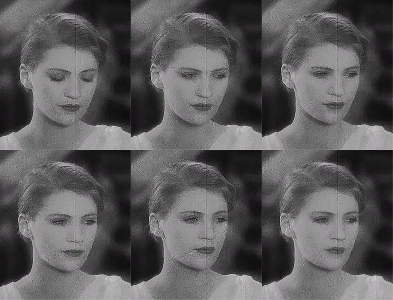
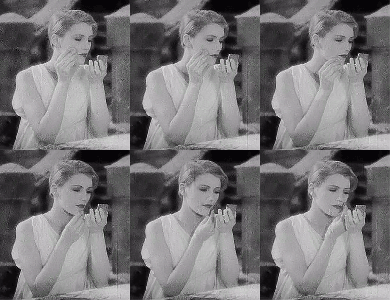
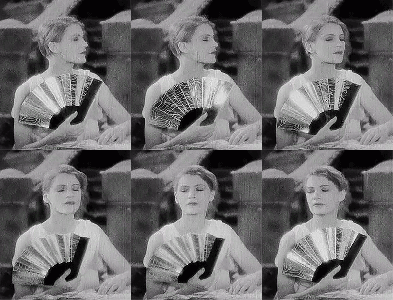
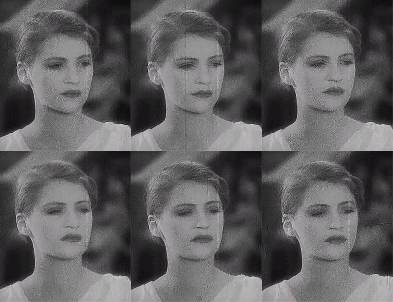
Lee Miller in her only film appearance in ’Le sang d’un poète’ (1930), directed by Jean Cocteau.
Lee Miller (1907–1977) is one of the most remarkable female icons of the 20th century – an individual admired as much for her free-spirit, creativity and intelligence as for her classical beauty. Lee began her modelling career on the cover of American ‘Vogue’, and was photographed by the greatest talents of the day before going to Paris, where she became a highly acclaimed photographer whose worked spanned documentary, portraiture, travel, fashion and advertising, as well as striking experimental Surrealist images. Together with Man Ray (Lee was his student, collaborator, lover and muse), she discovered the photographic technique of solarisation. During the Second World War, she was a war correspondent for Vogue, covering events such as the London Blitz, the liberation of Paris, and the concentration camps at Buchenwald and Dachau. During that time, she was the only official female photojournalist working in combat areas. (x)
Olympic National Park’s 73-mile long wilderness coast is a rare treasure. This Washington park is home to rocky headlands, sandy beaches and tidepools teeming with life. Offshore sea stacks topped by nesting seabirds and wind-sheared trees add to the already picturesque landscape of Ruby Beach. Sunset photo by Brooke McLean (www.sharetheexperience.org).
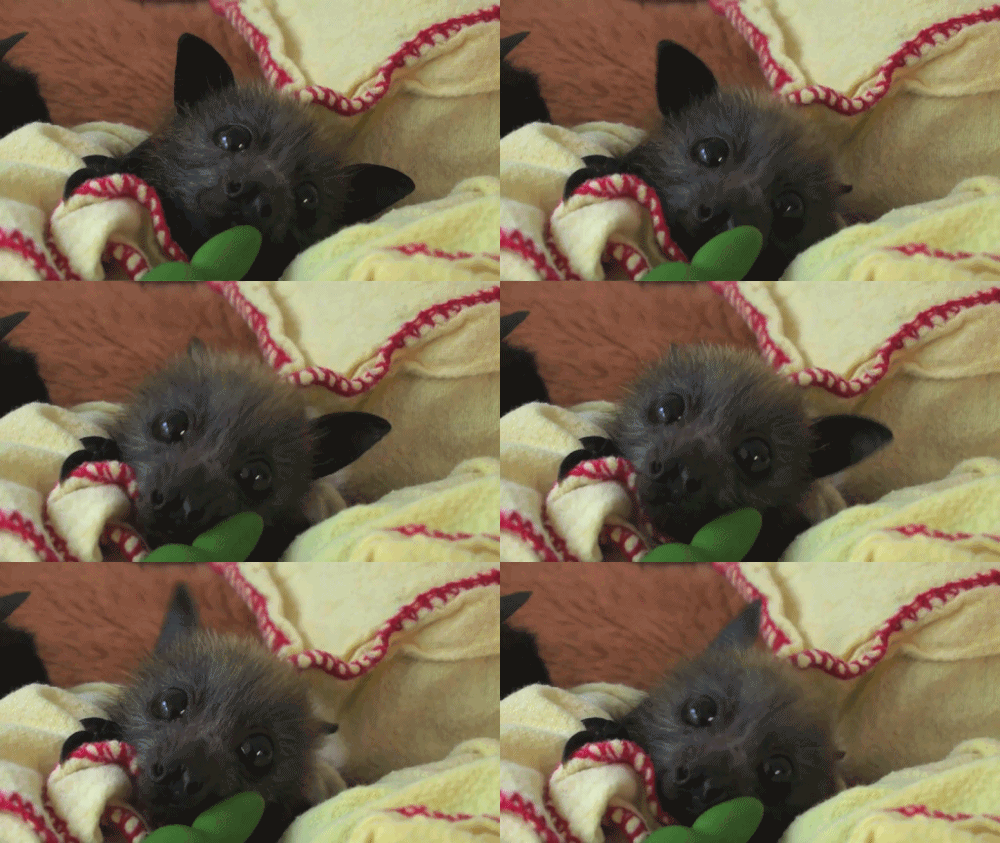
because they fly at night [Italian: pipistrello, Slovenian: netopir, Polish: nietoperz, Greek: nykterides, Farsi: shab parreh]
So bat literally means flapper. You’re welcome.
This, my friends, this is true etymology. Explaining why something is named the way it is, finding patterns and principles of meaning, not just tracing a word’s form back through time (which, admittedly, is oftentimes a prerequisite for exploring the former).
This exact conversation is how I became friends with @pipcomix






 tora42's nonsensne