i think sometimes when we see the weight of systemic oppression / crushing capitalism / pain and destruction it feels overwhelining and stuns us into inaction because it feels like there is SO MUCH that needs to be done, but you alone don’t need to solve it all. what you can do is find your own strength, and use that to help to make your community / this world a more loving and safer space, we can all contribute to revolution and it’s not solely through front line activism, but through cooking, teaching, art making, healthcare, growing food, organizing, etc
PART TWO OF THREE || Where Johnny goes, the Devil follows; where Johnny goes, the Devil is already there.
He does try to play the thing once or twice.
But a fiddle of gold is heavy as shit, and the sound’s all wrong—loveless, and cold as Hell, with vicious strings that split Johnny’s fingers when he plays. (There’s never any blood when he looks, and Johnny wonders if it’s drinking him up, dry; leaving scars at his fingertips and an ache in his hand that won’t quite ease. Then again, it’s the Devil’s instrument; it can probably do any evil thing it likes.)
In the end, he loosens the bow-hair and puts the thing away in a battered, borrowed case, goes back to playing his box maple. Wood is living, it breathes and breaks; swells like your best girl’s clit under your tongue, shivers like a warm wind through leaves. Wood remembers the sun, wants to sing about it.
There’s nothing gold wants to sing about, except being dead.
Johnny’s playing the maple that night at the Bellows Club—well, used to be ‘Club’ until the owner’s second wife decided they were destined for better things, had it rechristened ‘Café’. The Tuesday-night regulars are the same, though, and they whistle or lazily applaud when he finishes his set, greet him by name after he’s put the fiddle away and come down off that high-as-Heaven stage. Johnny wades out among them to make a little small talk, then wanders his way to the bar.
I spent the afternoon arranging our books by size and color (and it’s so satisfying and looks amazing) and my partner came home and stared in shock at the bookcase and then said “i’m a librarian, you can’t do this.”
him: you split up all the song of ice and fire books
me: yeah i know, they’re all primary colors, it’s perfect
him: [self-destructs]
You’re a monster
As a former bookstore employee, this hurts my soul. I mean, sure it looks nice, but how do you find anything?
it has occurred me during this process that apparently not everyone thinks about books by what color they are? like, literally when i’m looking for a book, i picture it in my mind. i have a very…tactile experience with the books i read and idk! i thought everyone did that lol.
my partner was like “how will i find [this book] for instance” and i replied “easy, it’s purple” and he looked at me like i was a witch.
OP your brain is neat and I love you for it you funky little color-coded cupcake. But you’re still a monster.
I store books by size out of necessity
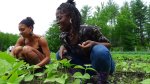
Leah Penniman made it her goal to start a farm for her neighbors, and to provide fresh food to refugees, immigrants and people affected by mass incarceration.
Leah Penniman (left) and Amani Olugbala tend to beans at Soul Fire Farm.
Leah Penniman was told she wasn’t welcome, from her first day in a conservative, almost all-white kindergarten.
She enjoyed learning and did well, but she also found solace in the natural world.
Penniman later got a summer job farming in Boston, and she was hooked. She learned about sustainable agriculture and the African roots of those practices, but she also moved to Albany, N.Y., to a neighborhood classified as a food desert. To get fresh groceries from a farm share, she walked more than two miles with a newborn baby in a backpack and a toddler in the stroller, then walked back with the groceries resting on top of and around the sleeping toddler.
She made it her goal to start a farm for her neighbors, and to provide fresh food to refugees, immigrants and people affected by mass incarceration. She calls the lack of access to fresh food “food apartheid” because it’s a human-created system of segregation.
Penniman and her staff at Soul Fire Farm, located about 25 miles northeast of Albany, train black and Latinx farmers in growing techniques and management practices from the African diaspora, so they can play a part in addressing food access, health disparities, and other social issues. Penniman’s new book, Farming While Black: Soul Fire Farm’s Practical Guide to Liberation on the Land, details her experiences as a farmer and activist, how she found “real power and dignity” through food, and how people with zero experience in gardening and farming can do the same.












 tora42's nonsensne