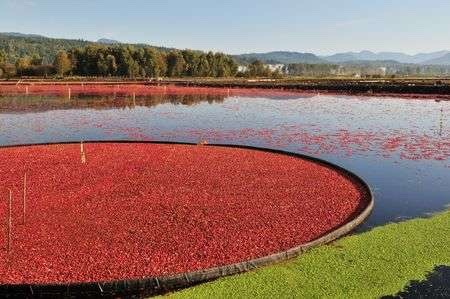
why do they always show cranberries in thos big pits n its implied its wet and possibly swimmable. do cranberries really grow like that. wh
You’ve never heard of The Bog?
th
the what
EACH ADDITION TO THIS POST MAKES MY BLOOD RUN COLD
This is a cranberry bog (unflooded) it’s how cranberries grow. Once they’re ripe, the blog is flooded and the cranberries harvested.
Basically by using big floaty things to round them all up and then scooping them out of the water.
thank u. i hate it a little less but the horrible little man in my head is still screaming “BOG BODY BOG BODY BOG BODY”, but i appreciate the education,
@jstor how does a post-grad person get access to those journals? I miss nerding out. 😦
OH I’M GLAD YOU ASKED.
1. Does your uni provide access to alumni? Check here.
2. Do you live in a city that provides JSTOR access through the public library? NYPL does, as does Boston Public Library – check your local library!
3. Sign up for a free Register & Read account – create a MyJSTOR account and get online reading access to 85% of the journals on JSTOR. Check it out how to sign up (in an admittedly silly video) here, as well as how to manage your account.
4. Need to download? Sign up for JPASS, our subscription service for independent researchers. 10 article downloads per month, it’s $19.50/month or $195/year. More info (+10% off the yearly plan) here.
5. Interested in ONLY historical content published prior to 1923 in the US and 1870 worldwide? GOOD NEWS, all those articles are freely available. Just enter a search term, click the “Journals” tab in the results page, then sort by “Oldest” – early journal articles that are free to access will have a little “FREE” icon next to the title.
6. Just need one article? Many are made available by the publishers for single purchase directly from the JSTOR platform. Prices are set by the publishers, and vary widely, so just be aware of that.
Hopes this helps! Feel free to reach out with any questions on any of the above.
Regular reminder that there’s literally nothing stopping white people from enjoying their own heritages and that all that bonehead noise about how “the SJWs” are gonna come after you because you wanna learn Irish or you think Vikings are cool is just straight-up a lie.
Y’know what robs white people of culture? White supremacy does. And you can take that to the fuckin bank.
This is actually something I’ve felt for a long time but was afraid of talking about because I wasn’t sure if anyone else felt the same way. We’re losing any and all important ways of positively and benevolently performing, expressing, sharing, and celebrating our cultures because they keep getting invaded and corrupted by white supremacists.
It’s the white supremacists we need to annihilate. Then we can have our celebrations.
Gatekeep white supremacists from white culture. Separate them from it, remove them from it.
They’re not white culture, they’re hate culture.
When Urgroßvater fled the Rhineland way back in the day, he wound up in Mississippi. All the kids grew up as monolingual Anglophones, because the last thing you want to be in a place like that is different; better to identify with the dominant group, if you’re lucky enough that that’s an option. Any meaningful sense of heritage was gone by the time the next generation learned to talk. Now it’s 2018 and all the German I have is Berliner Hochdeutsch from school and Duolingo. Whatever songs and stories and traditions I could’ve had are just gone, like a fart in the wind.
Deep down in my bones, I feel like I was cheated out of something. And it was the pressure and desire to assimilate into whiteness that did the cheating.
The same thing happened to me with Italian on both sides, children raised to fit in without any real heritage or traditions passed on.
Same, my maternal grandmother’s family spoke French as a first language, but because they were punished in school for speaking it, they never passed it on to my grandmother and we only know a few children’s songs in French. I don’t know when my own Urgroßeltern up in Illinois lost their language, but I know there was a strong dislike for anything German in that area, even before WWII. Same story with my Irish great grandma. Even my English ancestors largely shed a ton of their cultural traditions on the ship ride over in favor of a culture steeped in Puritanical misery. How many stories and folk customs weren’t passed on? The family recipes and traditions and art? Do we, as children of immigrants from these cultures have a right to reclaim these things now? Or did we loose our right to it when our ancestors gave it up?


























 tora42's nonsensne